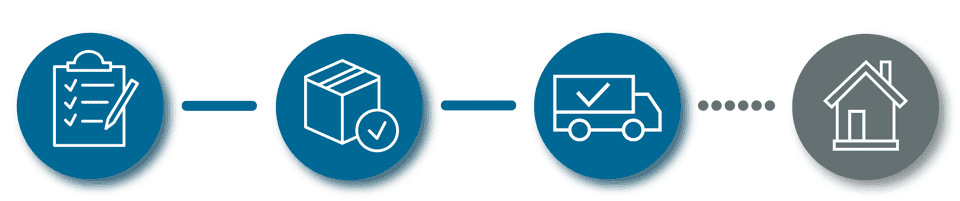

Tracking all hand-overs in the supply chain
The core elements:
- Automatically capture trace information on item level in the supply chain for all traced items
- Effective integration of data from multiple sources to create seamless end-to-end traceability
- Ability to search for specific items and gain full track and trace record
- Data to support compliance to regulations and customer requirement



Meeting the increased traceability documentation demands
Traceability demands is not just the concern of consumers, but it is also a tied to legislation. Depending on your industry, you are required to comply with different legal traceability requirements from government and business partners i.e. Eu 178/2002/ec. Traceability solutions provided by Lyngsoe Systems makes it easier to ensure the quality of your data and align documentation across your supply chain to make sure, you can provide external stakeholder with the needed traceability documentation. This could as an example be gaining electronic access to COFA (certification of analysis) for fast verification of correct certification and approvals of your product.
Products on hold and efficient recalls
To effectively manage a global distribution full traceability and visibility into supply chain flows are required. If products are on hold e.g. Due to lab test for food product, you are forced to continue your distribution, even though your products are not released for sale yet. You need to know exactly where these items are and where they are going and well as keeping the logistic locations informed about the hold. Lyngsoe systems traceability solutions helps companies keep track of all “on-hold” items without delaying the distribution. If there is a need to recall a product, the comprehensive traceability enables you to perform very targeted recall limiting the affect to your brand and direct costs to a minimum.
Keep track of all you "on-hold" items without delaying distribution
Contact us to learn how we can simplify the complexity through real-time tracking and traceability.
Be inspired by others